
Know What You Hold: The Wassily Chair
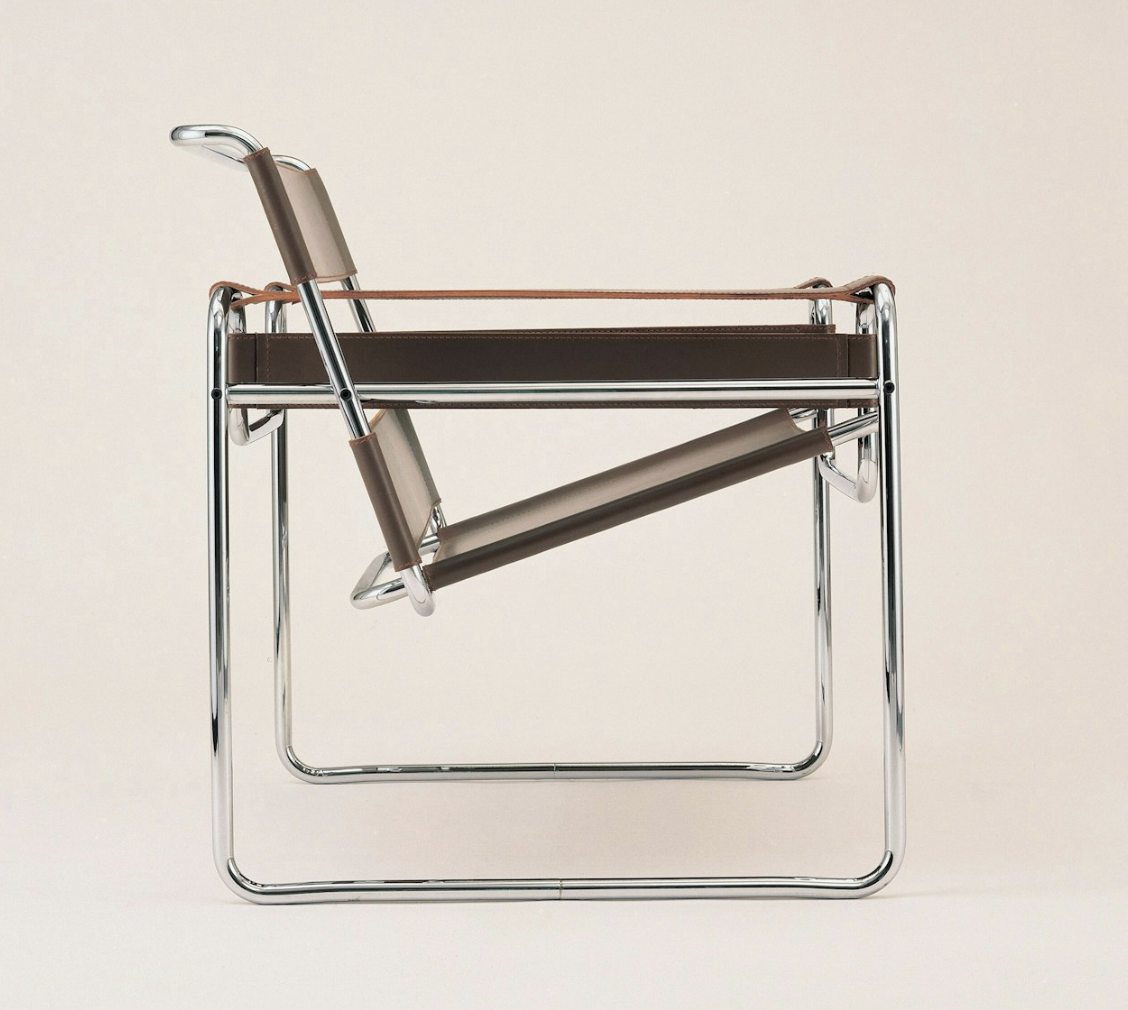
Wassily Chair manufactured by Knoll. Photo courtesy of Knoll, Inc.
As a personal property appraiser, I often encounter objects that are familiar in appearance but misunderstood in value. Marcel Breuer's Club Chair, Model B3, better known as the Wassily Chair, is one of them. It is among the most recognizable furniture designs of the twentieth century, appearing everywhere from fine art museum collections to design influencers' Instagram posts. Yet it has been produced by multiple manufacturers over several decades, with variations in materials, construction, and craftsmanship. From an appraisal standpoint, identifying which Wassily Chair you have is often far more important than simply recognizing the design.
Understanding that distinction begins with the chair's history. In 1925, while working at the Bauhaus in Dessau, Breuer began experimenting with tubular steel as a furniture-making material. He is often said to have drawn inspiration from the strength and lightness of his bicycle's handlebars. The use of tubular steel marked a departure from his earlier wooden furniture designs. Breuer developed several prototypes before the Model B3 evolved into a commercially produced chair.
The chair's tubular steel frame and suspended Eisengarn upholstery created a lightweight structure that differed significantly from the traditional upholstered club chair. Rather than relying on a solid wooden frame and bulky padding, the design used exposed metal tubing and tensioned surfaces to support the sitter.
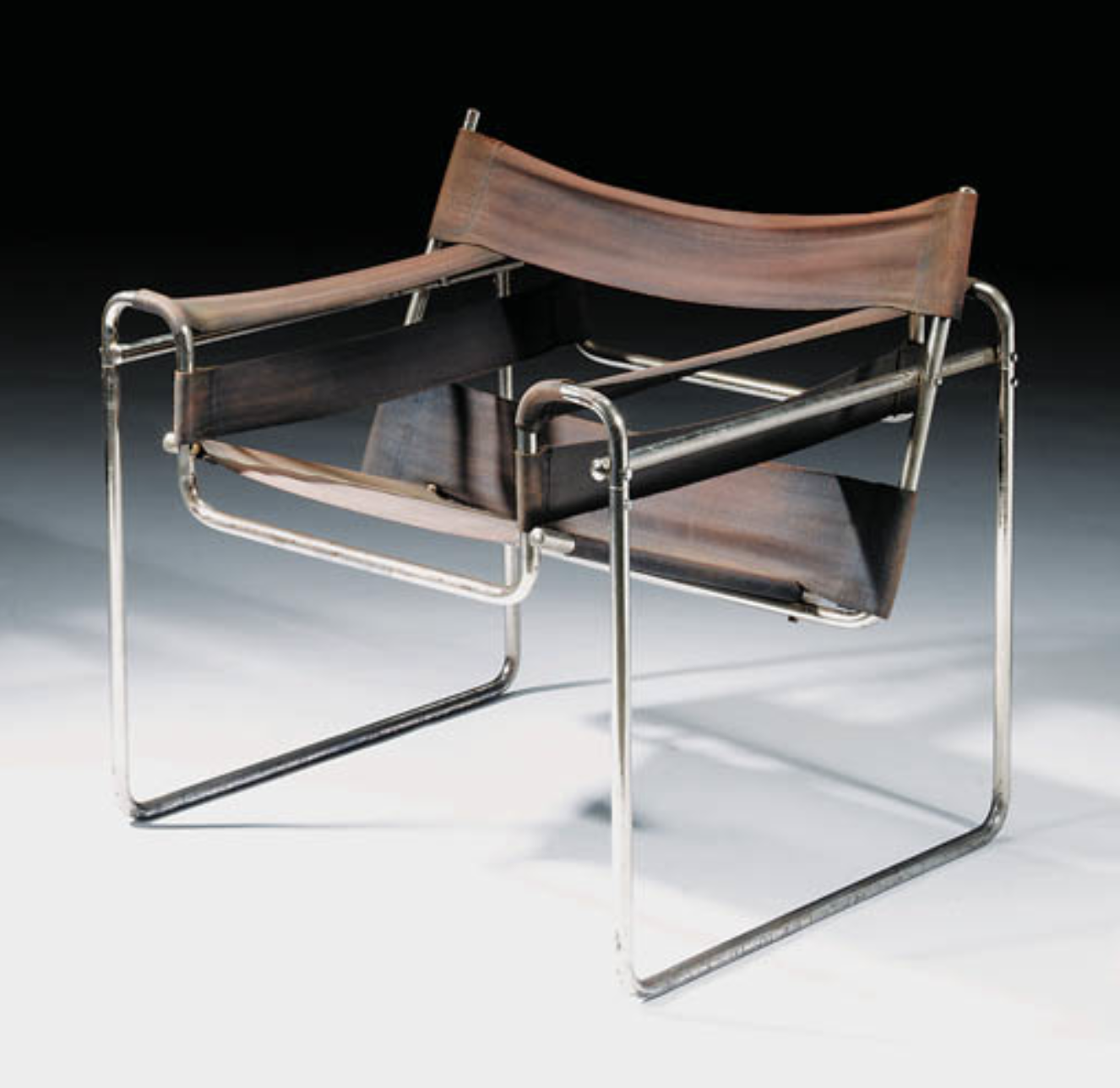
Wassily Chair, Model B3 manufactured by Standard-Möbel, Berlin, 1925-6. Photo courtesy of Christie’s Images Ltd. 1999.
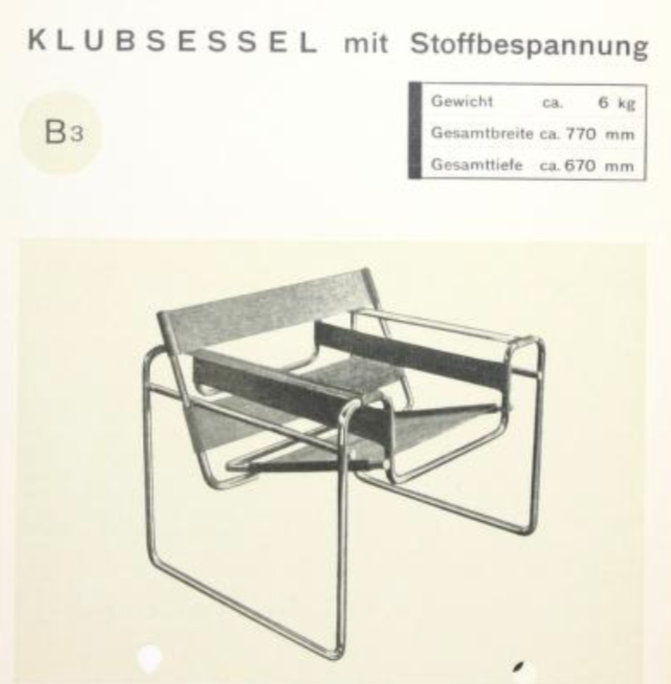
Standard-Möbel catalogue from 1927 featuring the Club Chair, Model B3.
In the late 1920s, Breuer and architect Kálmán Lengyel established Standard-Möbel in Berlin to manufacture and distribute tubular steel furniture. In 1929, Gebrüder Thonet AG of Frankenberg (Eder) acquired Standard-Möbel and continued manufacturing the Model B3 with design modifications in 1930. Then production ceased during World War II.
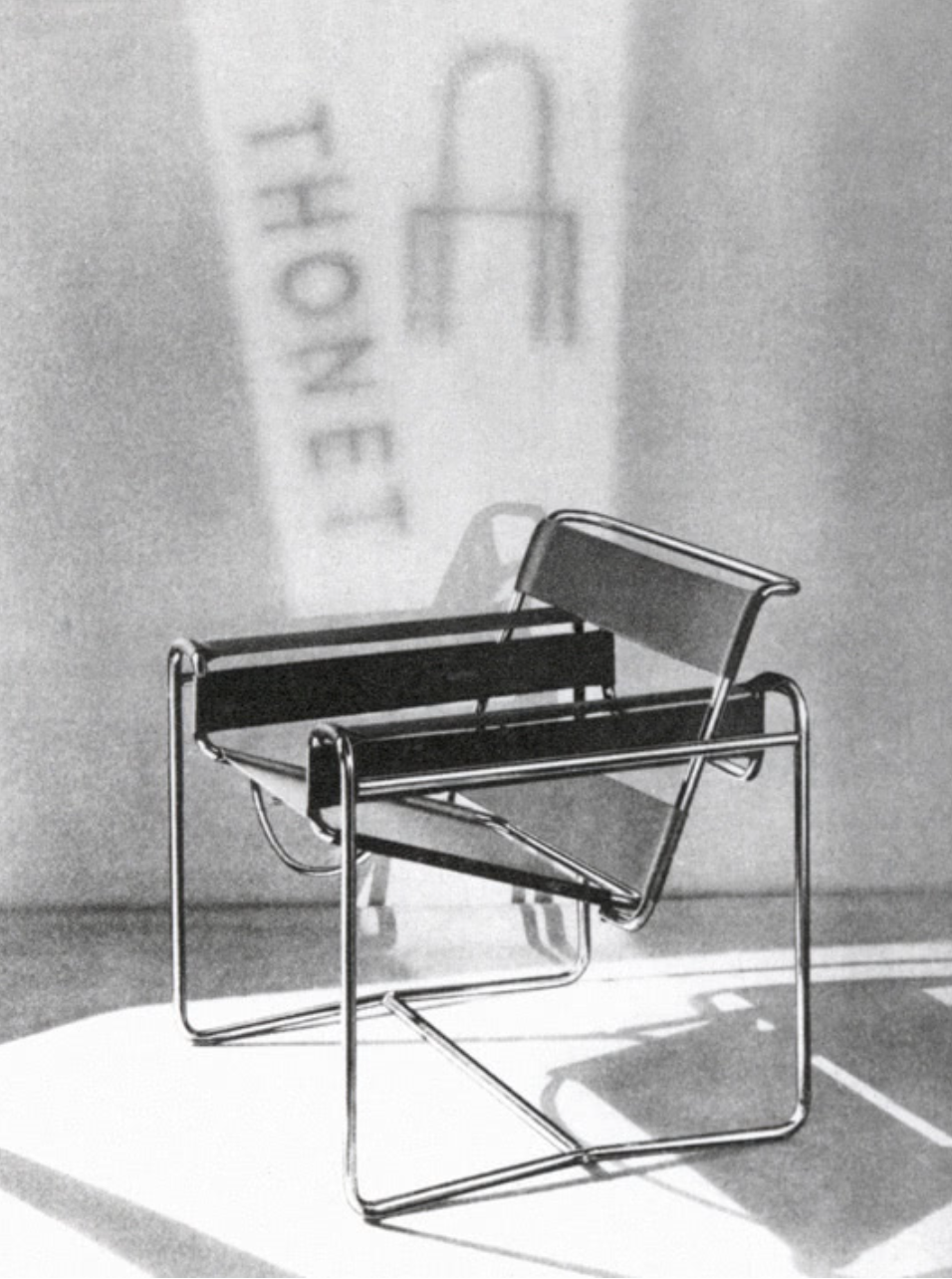
Wassily Chair manufactured by Gebrüder Thonet AG, Frankenberg, Eder. Photo courtesy of Thonet.
This production history is more than a timeline; it directly influences value. Examples associated with Standard-Möbel and early Thonet production are of particular interest to collectors of modern design and museums. However, age and manufacturer alone do not determine value. Condition, provenance, and current market demand must also be considered.
In the 1960s, the Italian manufacturer Gavina SpA revived the design, using Italian leather upholstery and introducing the name Wassily Chair in reference to the painter Wassily Kandinsky, an early admirer of Breuer's work. Knoll acquired Gavina in 1968 and subsequently continued production of the chair. Knoll examples remain available in a range of upholstery and frame finishes.
One common misconception I encounter is the assumption that a label alone establishes authenticity or value. Manufacturer and distributor labels, including those associated with Gavina, Knoll, Stendig, and other companies, can help identify a chair, but they should not be treated as conclusive evidence. Because the design has been manufactured over several decades, differences in frame construction, plating, hardware, upholstery, and overall craftsmanship can provide important clues to a chair's origin and production period.
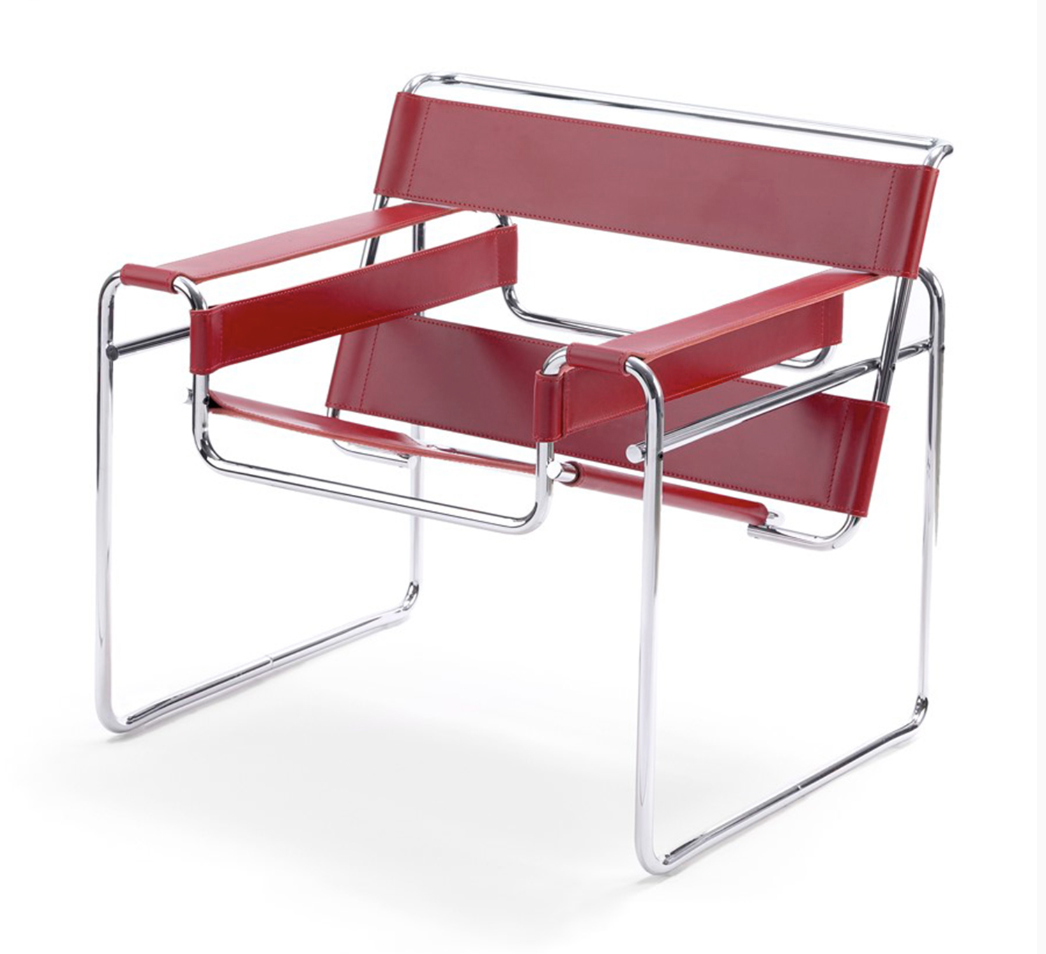
Wassily Chair manufactured by Knoll. Photo courtesy of Knoll, Inc.
Knoll continues to manufacture the Wassily Chair, while older examples are traded through dealers, auction houses, and private sales. Reproductions and interpretations by other manufacturers are also available at lower price points. These pieces may resemble the original design, but their market positions and collector interest can differ substantially.
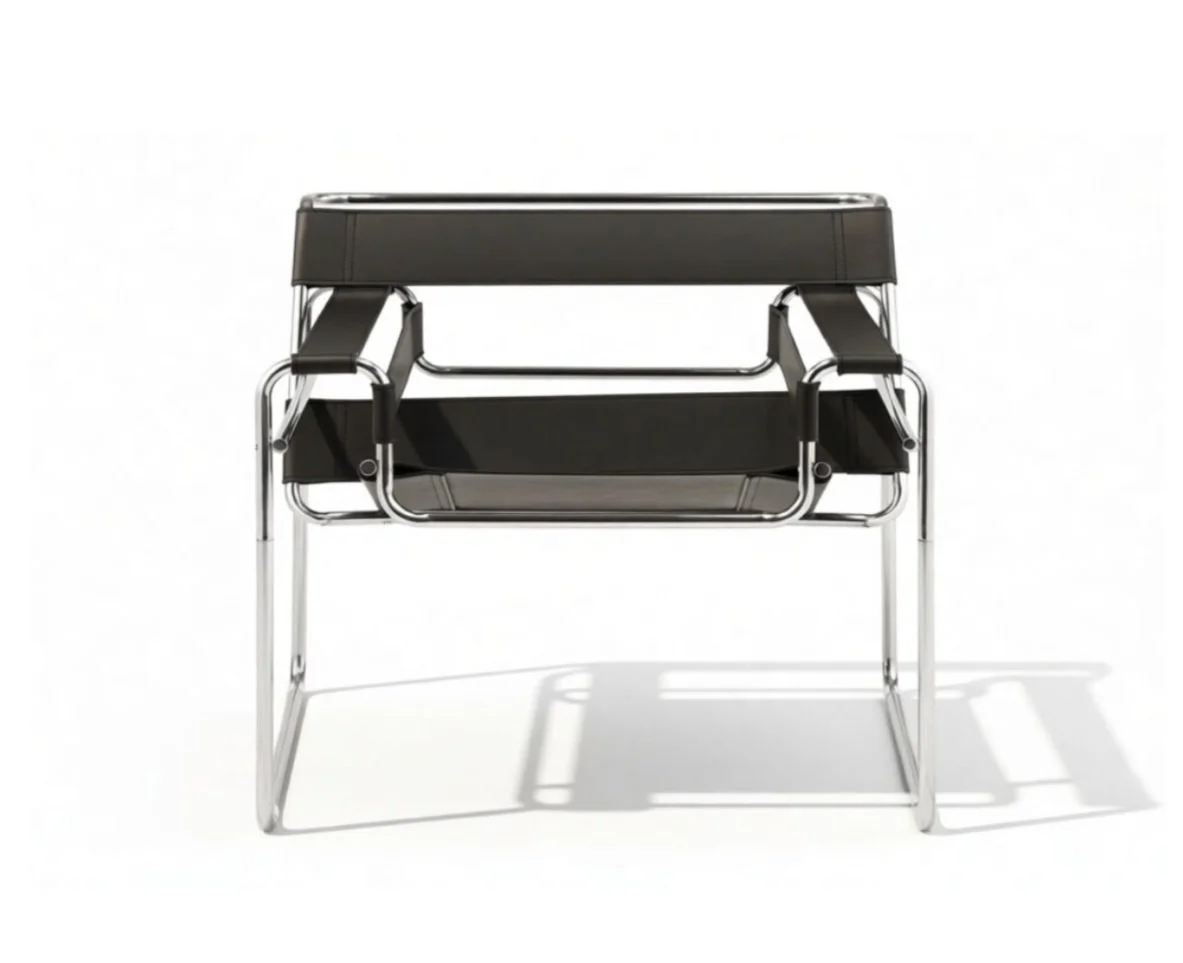
The Wassily manufactured by Thorvald & Design. Photo courtesy of Thorvald & Design.
From an appraiser's perspective, the Wassily Chair demonstrates that value is rarely determined by appearance alone. Two chairs may look nearly identical yet differ significantly in market value. Identifying the manufacturer and production period, assessing the materials and construction, and comparing the chair with relevant market evidence are essential steps in determining its value.
______________________________________________________________________________________
Sources
Bergdoll, Barry. Marcel Breuer: Bauhaus Tradition, Brutalist Invention. With a contribution by John H. Beyer, The Metropolitan Museum of Art Bulletin, vol. 74, no. 1, 2016.
Bergdoll, Barry, et al. Bauhaus 1919–1933: Workshops for Modernity. The Museum of Modern Art, 2009.
“A Complete Guide to the Wassily™ Chair.” Knoll, https://www.knoll.com/shop/en_us/wassily-chair-guide.html.
“A Chromium-Plated Tubular Steel ‘Wassily Chair,’ Model B3.” Christie’s, Nov. 1999, https://www.christies.com/en/lot/lot-1621001.
“Dino Gavina.” Knoll, https://www.knoll.com/designer/Dino-Gavina.
“A Nickel-Plated Tubular Steel and Canvas ‘Wassily’ Chair, Model B3, 1925/6.” Christie’s, May 1999, https://www.christies.com/en/lot/lot-1460077.
“Story.” Thonet, https://www.thonet.de/en/company/story.
Wilk, Christopher. Marcel Breuer, Furniture and Interiors. The Museum of Modern Art, 1981.